
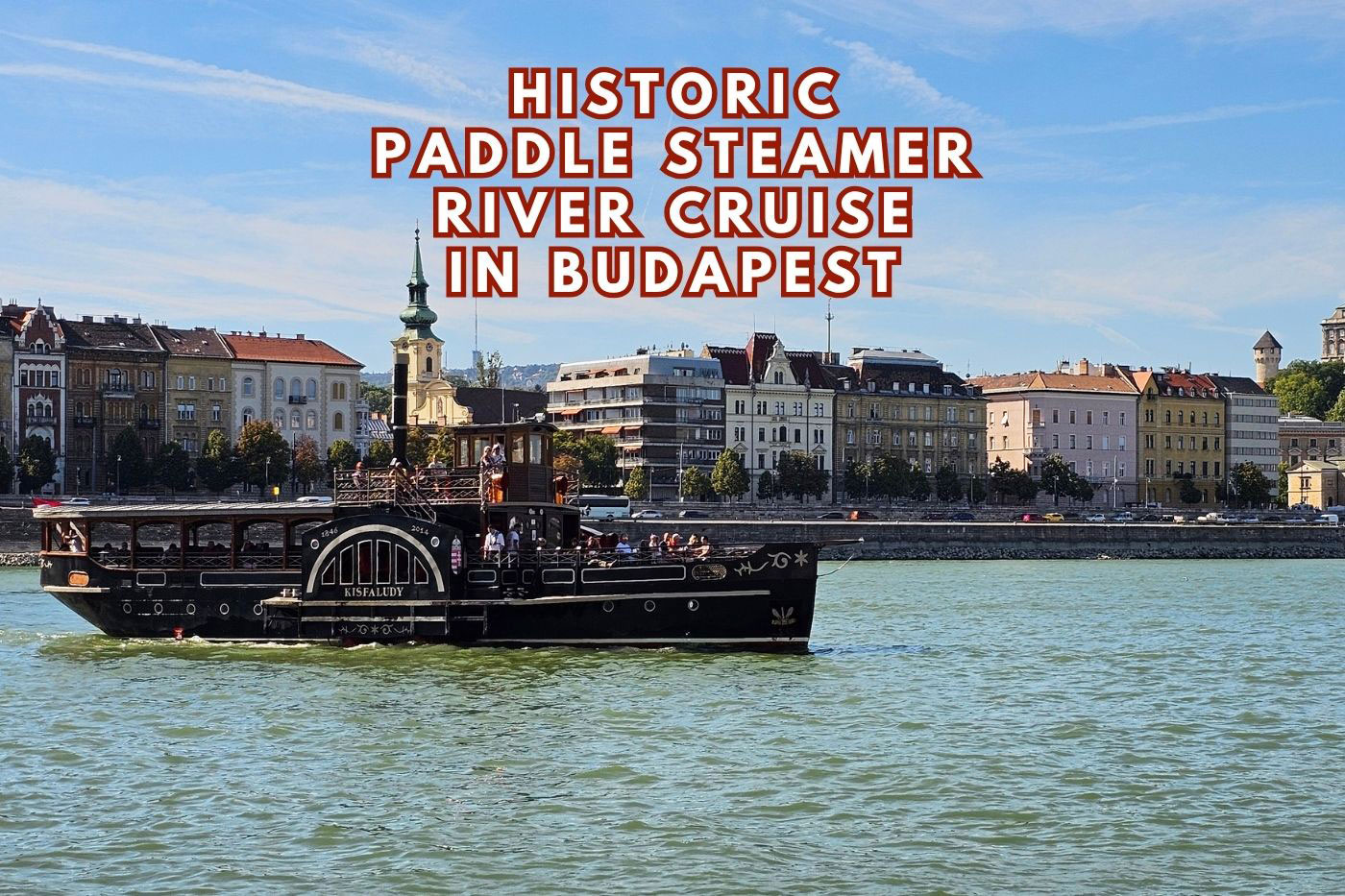
Budapest Historic Paddle Steamer Cruise: Why Choose This Danube Boat Tour
I’ve always had a soft spot for the Budapest historic paddle steamer cruise: every time I saw these boats gliding on the Danube, I told myself: one day, I’ll be on them. Somehow, I kept putting it off, no idea why?! Until recently, when I spontaneously decided it was finally time.
And what a lovely decision that was! While Budapest has more river cruises than I can count, the historic paddle steamer cruise truly stands out and offers a different sightseeing experience. It’s unique, locally operated, and offers a touch of nostalgia that modern sightseeing boats just can’t replicate.
In this article, you’ll find my honest review of the tour, along with all the practical information and extra tips you need to know if you’re planning to do it. Let’s explore the most authentic river cruise in the city – the historic paddle steamer experience!
Disclosure: This post may contain affiliate links, which means I may receive a small commission, at no extra cost to you, if you make a purchase through my link.
Why You Should Choose The Historic Paddle Steamer Cruise In Budapest?
There are plenty of cruises in Budapest, sometimes a little too many; on summer evenings, the Danube can resemble a floating traffic jam but the historic paddle steamer really stands out.
These river cruises are operated on restored, historic-style vessels, the Kisfaludy and the Hableány, powered by side paddles instead of modern engines. They offer a more traditional, nostalgic experience, and the boats are typically smaller and less crowded than the standard sightseeing ships.
What makes these cruises even more special is the attention to historical detail: the interiors retain period-style woodwork, brass fittings, and classic furnishings, making the ride feel like a step back in time. The slow pace of the paddle steamer allows passengers to take in the views at leisure, giving plenty of opportunities for photography or simply enjoying the calm Danube.
Unlike many modern sightseeing boats, these vessels offer a more personal, intimate experience – you can move around freely, find your perfect spot on deck, or chat with the crew who often share small insights about the city and the boat’s history.
Finally, the evening cruise adds an extra layer of magic: as the sun sets, the city lights reflect on the water, and Budapest’s iconic landmarks, like the Parliament, Buda Castle, and Chain Bridge, look even more breathtaking from the deck of a historic steamer.
About The Historic Paddle Steamers: Kisfaludy & Hableány
Both the Kisfaludy and Hableány paddle steamers offer a unique and historical perspective of Budapest, allowing passengers to experience the city from the Danube River aboard vessels that echo the elegance and innovation of a bygone era.
Kisfaludy – A Floating Tribute to Hungarian Heritage
The Kisfaludy is a meticulously restored replica of the first steamship on Lake Balaton, originally launched in 1846. Named after the celebrated Hungarian poet Sándor Kisfaludy, the vessel was revived in 2014 to honor Hungary’s maritime legacy.
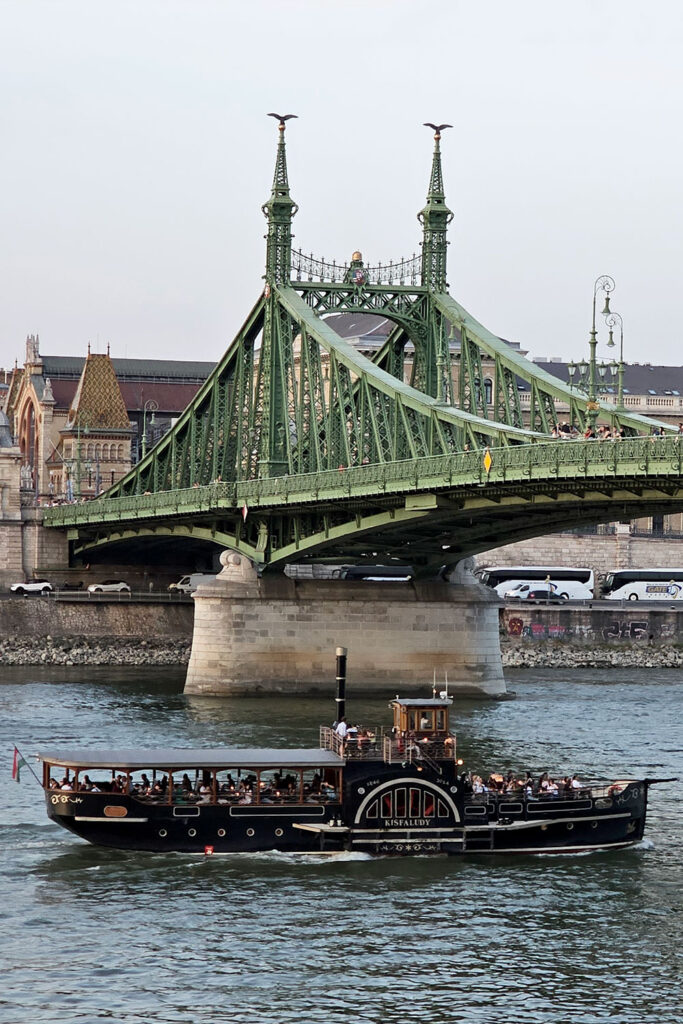
Its design, characterized by side paddle wheels and a wooden hull, offers passengers a nostalgic journey reminiscent of 19th-century river travel. Today, the Kisfaludy operates as a faithful recreation of the original, providing an authentic experience that combines historical charm with modern amenities.
This boat can accommodate up to 90-100 guests, making it an ideal choice for larger groups or even events like weddings or corporate gatherings (if you are interested in event organisation, contact the operator directly).
Hableány – A Tale of Elegance
The Hableány, meaning “Mermaid” in Hungarian, was initially built in 1867 and became one of the highlights of the 1867 Paris World Fair. Designed by Count Ödön Széchenyi, son of the renowned István Széchenyi, the ship showcased Hungarian engineering prowess. After its debut, the Hableány embarked on a journey across Europe, symbolizing Hungary’s industrial advancements.
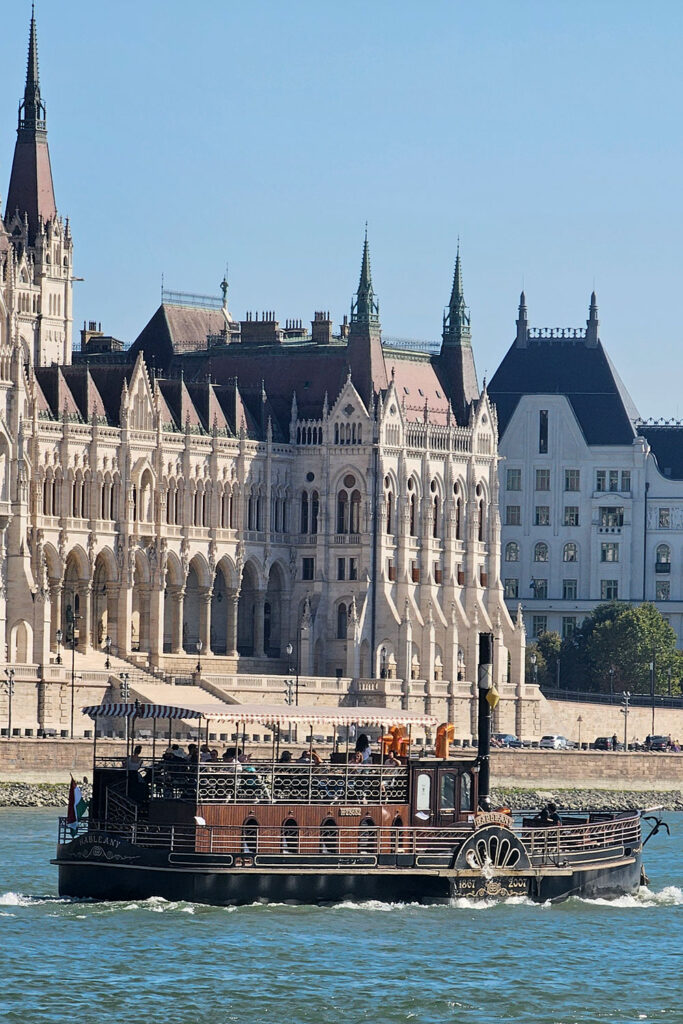
Sadly, the original Hableány met a tragic end in 1874 when a boiler explosion caused it to sink. However, its legacy lives on through its modern counterpart, which continues to offer passengers (up to 50 per cruise) a glimpse into the grandeur of 19th-century river cruising.
Which Boat Should You Choose?
Usually both boats are operating side by side, giving you the choice of which one to board. In low-season however, it can happen that only one vessel is in service. In that case, you’ll just take whatever comes – the experience is (almost) the same on both: historic and full of character. People lean slightly towards the Kisfaludy because it has a slightly newer build and offers more spacious deck areas.
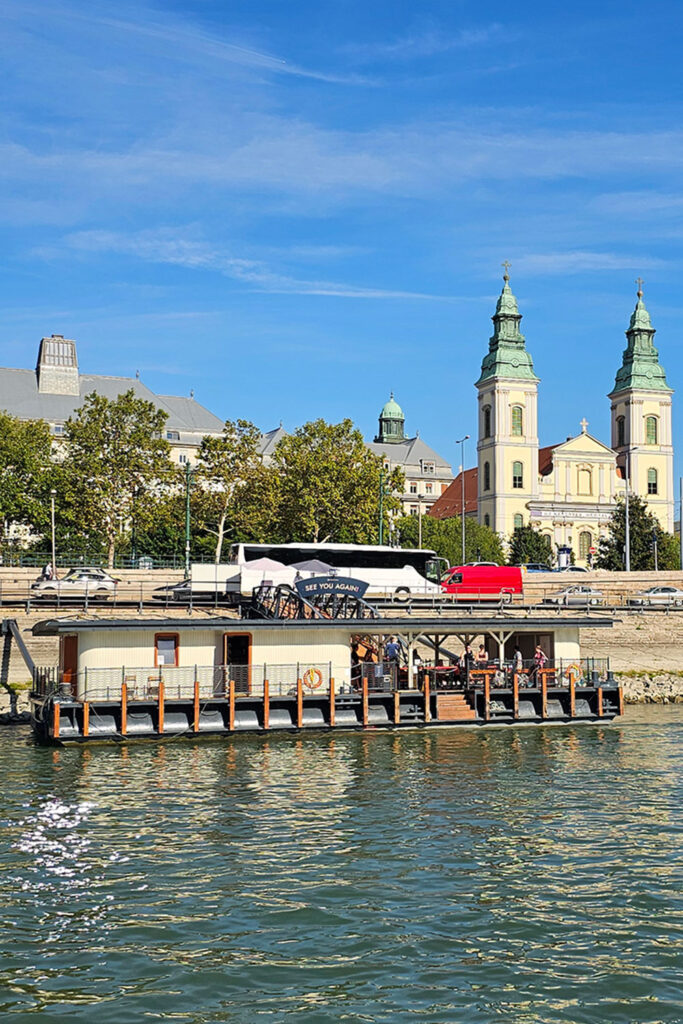
When you book online, you can select the type of boat rather than the exact vessel, so make sure to choose the “historic paddle steamer” option. If both boats are operating, they usually dock side by side, the Kisfaludy right next to the dock and the Hableány moored alongside it. During my cruise, the crew filled up the Hableány first, with passengers walking through the Kisfaludy to board.
This means that the boat you end up on often depends simply on the time of your boarding – early arrivals typically go on the Hableány, while later ones are directed to the Kisfaludy. Since I knew I wanted to go on the Kisfaludy, I waited a bit to board that one.
Booking And Boarding
This was one of those spontaneous “why not?” afternoons, so I headed straight to the dock near Elisabeth Bridge (Erzsébet híd) and bought my ticket directly from the ticket booth – quick, easy, and refreshingly old-school. I could pay by card, though!
The high season had just ended, there was availability for the next departure at 14:30. However, during busier months, these smaller and popular boats usually sell out, so I’d recommend booking in advance if you want this specific cruise.
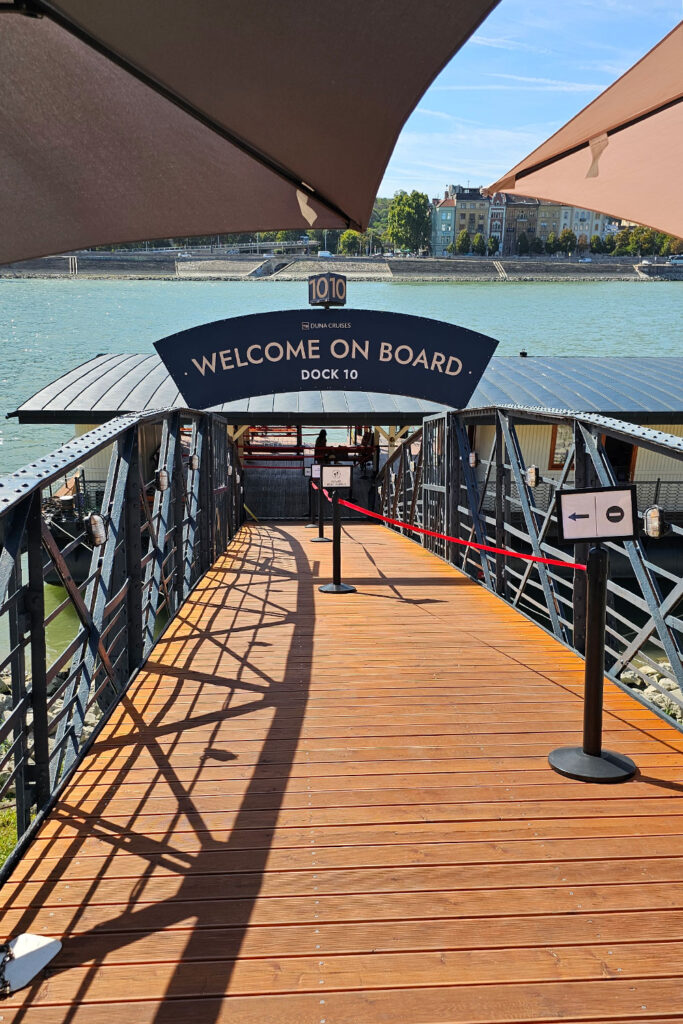
My ticket cost 5,000 HUF (around €12), which was the normal price for the weekend afternoon slot. Weekday early afternoon tours are usually the cheapest, starting from around €10, making them a great value option if your schedule is flexible. Sunset and evening cruises, which are understandably more popular for their illuminated cityscape, are priced higher, typically €28–36.
The waiting area at the dock was pleasantly comfortable – shaded, with benches available. It was a hot, September afternoon with summer-like weather; therefore, I really appreciated that I didn’t need to wait in the sun. OK, it’s not extremely large, so when both boats are fully booked, not every passenger would fit at once, but it still provides plenty of seating for a good number of people, especially useful for elderly passengers or families with kids.
It may sound like a small detail, but not all cruise docks in Budapest offer shade and seating while you wait, but let you stand on the embankment until the very last minute (I talk about this experience in my Budapest evening cruise review), so this was a nice touch that made a great first impression.
Onboard Experience
One of the things I love about this particular cruise is that it’s operated by a Hungarian company, Duna Cruises, and I always appreciate supporting local operators when I can. That local authenticity shows, both in the ship’s design and the crew’s professionalism.
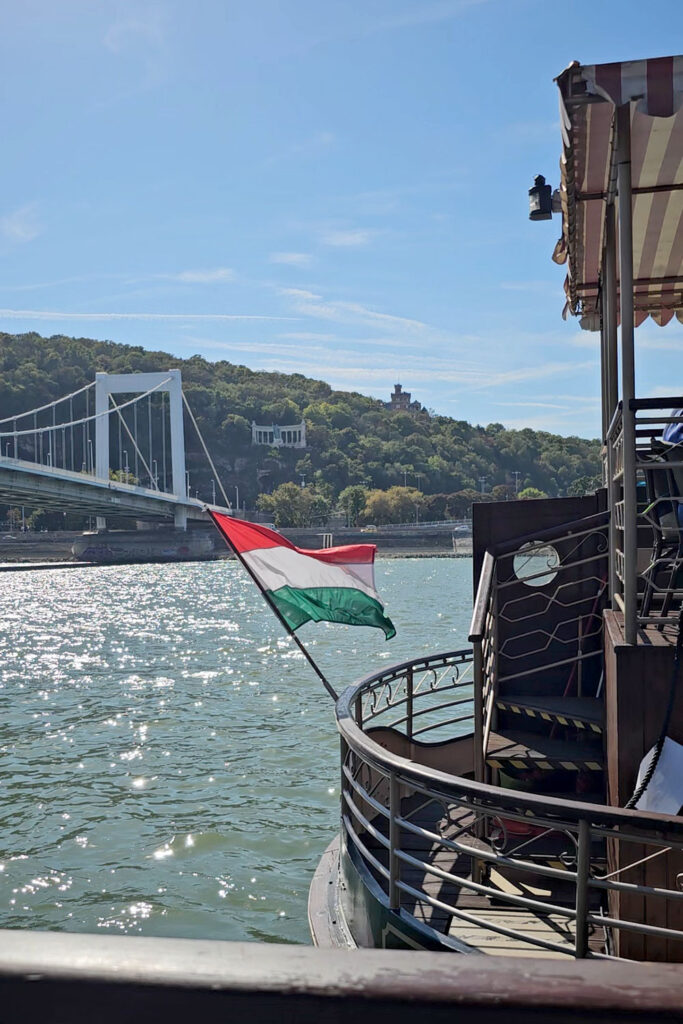
The boat was spacious, spotless, and beautifully maintained, with just the right blend of vintage and comfort. I especially loved the wooden construction, which gives it a warm, authentic charm compared to the all-metal builds of modern sightseeing boats.
The vessel has a covered main deck, an open front section, and a sunny upper deck, ideal for taking photos or simply watching the scenery go by. Since the boat was only about half full, I could move around freely and enjoy different views throughout the cruise. Everything felt thoughtfully designed to give passengers an authentic experience.
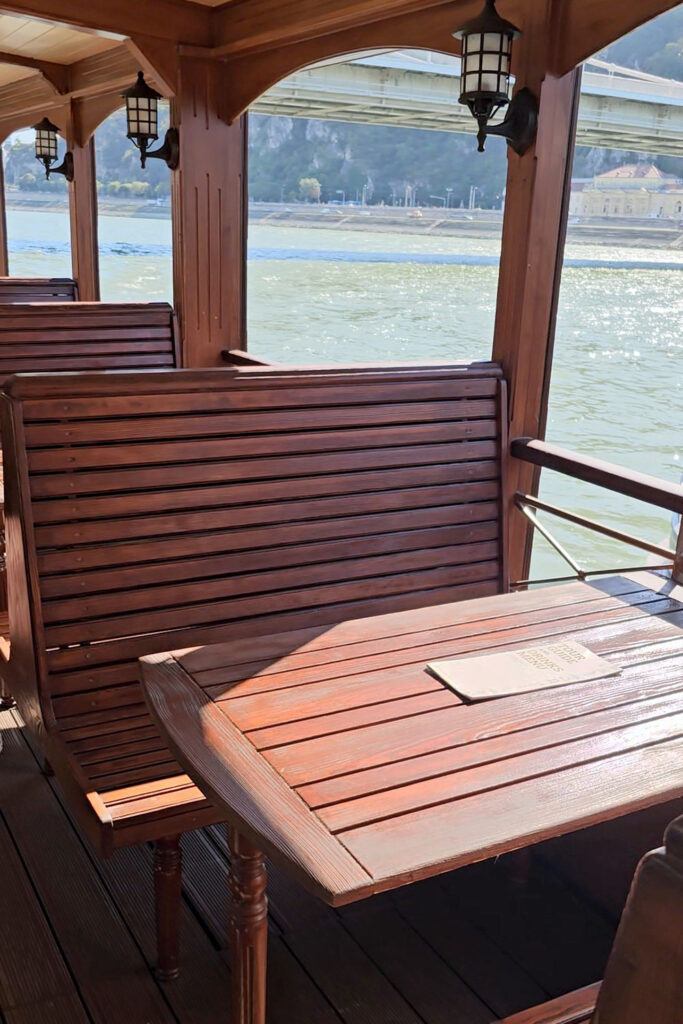
A welcome drink was included in the ticket: a glass of Törley Frizzante or orange juice. I opted for the Frizzante, and appreciated that it was a proper glass, not the tiny “symbolic sip” some other tours hand out. Additional drinks and snacks were available to purchase on board, but honestly, I was content just to sit back and enjoy my sparkling wine and the view.
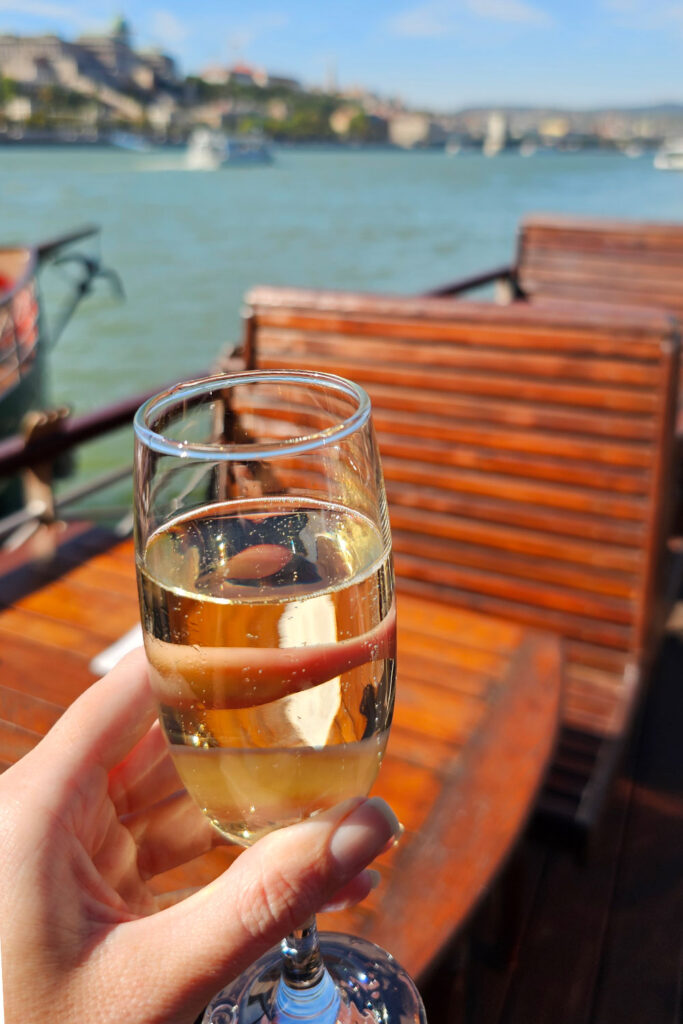
The staff was professional, polite, and attentive – the kind of service that feels quietly confident. They moved around regularly, collecting empty glasses and checking if anyone wanted to order more drinks, and they were well-dressed, adding to the cruise’s classy atmosphere.
I decided not to use the audio guide, preferring to focus on the views, but several passengers did, and it seemed to work seamlessly. The system is accessed via a QR code on your phone and offers commentary in over 30 languages – just remember to bring your earphones.
The Cruise Itself – Which Landmarks Will You See?
The one-hour cruise begins from Dock 10 (Jane Haining rakpart) on the Pest side, right next to Elisabeth Bridge. The route covers the Danube’s most picturesque stretch with most of the city’s main landmarks.
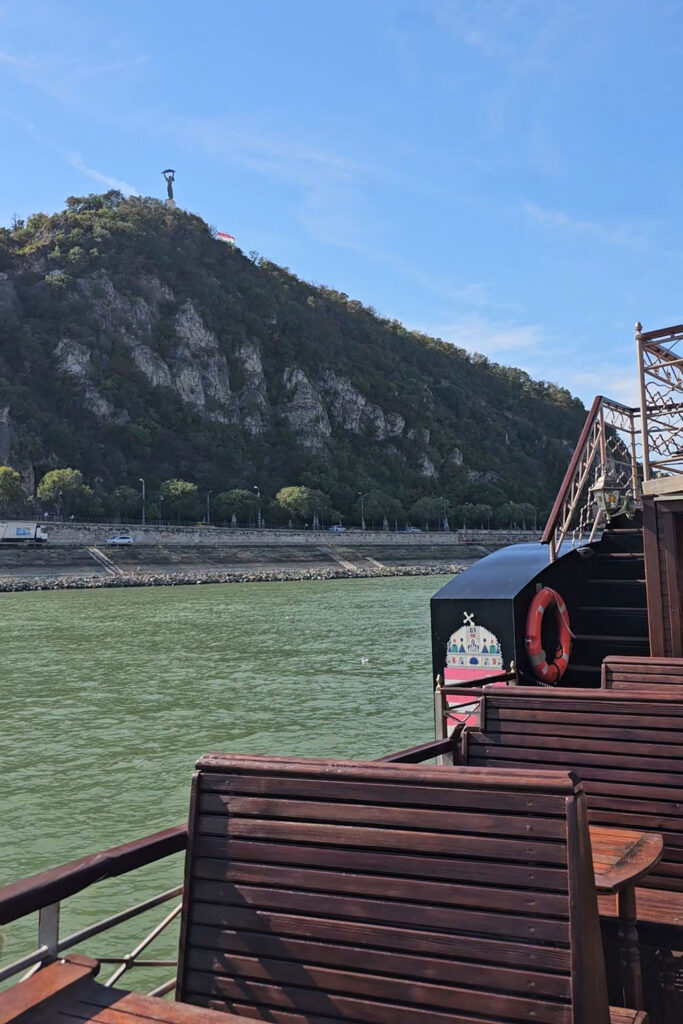
Here’s how the journey unfolds:
- The boat departs from the dock and turns south
- It cruises along the river’s Buda side past Elisabeth Bridge, Gellért Hill with the Liberty Statue on its top and the iconic Gellért Baths next to it
- The vessel turns right after Liberty Bridge and heads north, offering first-class views of the Budapest Whale (Modern Convention center) and the Great Market Hall
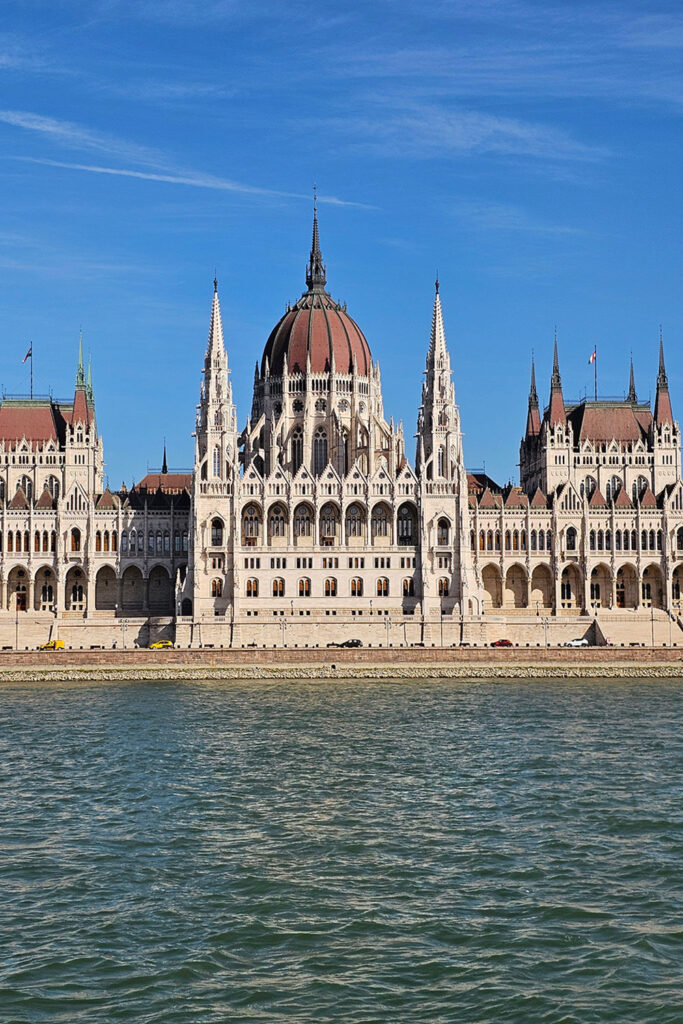
- Continuing the trip, it passes Chain Bridge, Inner City Parish Church, and the impressive Gresham Palace, one of the most luxurious hotels in Budapest which looks especially majestic when viewed from the water side and finally reaches the main highlight, the Hungarian Parliament Building
- The turning point is right before Margaret Bridge and Margaret Island, before returning to the departure point along the Buda side so you’ll get the opportunity to view Fisherman’s Bastion, Matthias Church, Buda Castle and Castle Garden Bazaar
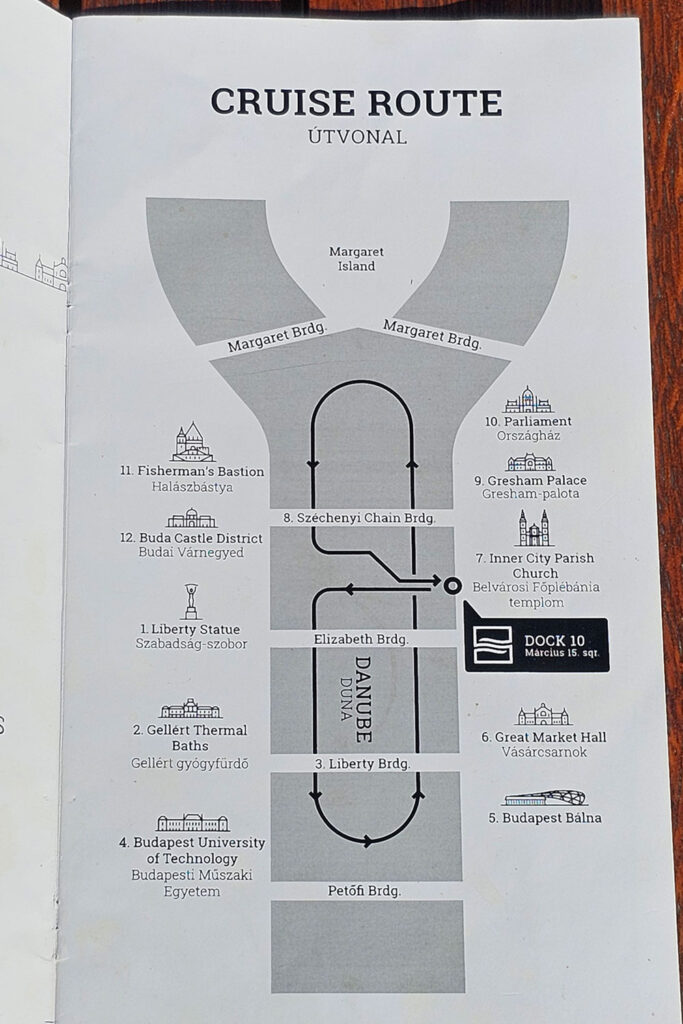
Along the way, the pace is relaxed and intentional, allowing for photo stops, gentle views of historic façades, and the possibility to move around the deck to catch the perfect angle. When we passed the Parliament building, our speed slowed noticeably, giving us more time to absorb the grandeur of that landmark.
How Much Does A Danube Paddle Steamer Boat Tour Cost?
Pricing depends on the time of day and season, but here’s a general guide (as of 2025):
- Ticket prices vary between ~€10 and €35–37
- The morning/early afternoon cruise costs around 4,000 HUF (≈ €10), while late afternoon and early evening departures are slightly more expensive
- Evening and night cruises typically range between €28–37. Children under three travel free (always double-check when booking, as the policy might change)
Ticket includes:
- 1-hour cruise
- Welcome drink (Törley Frizzante or orange juice)
- Access to audio guide via QR code
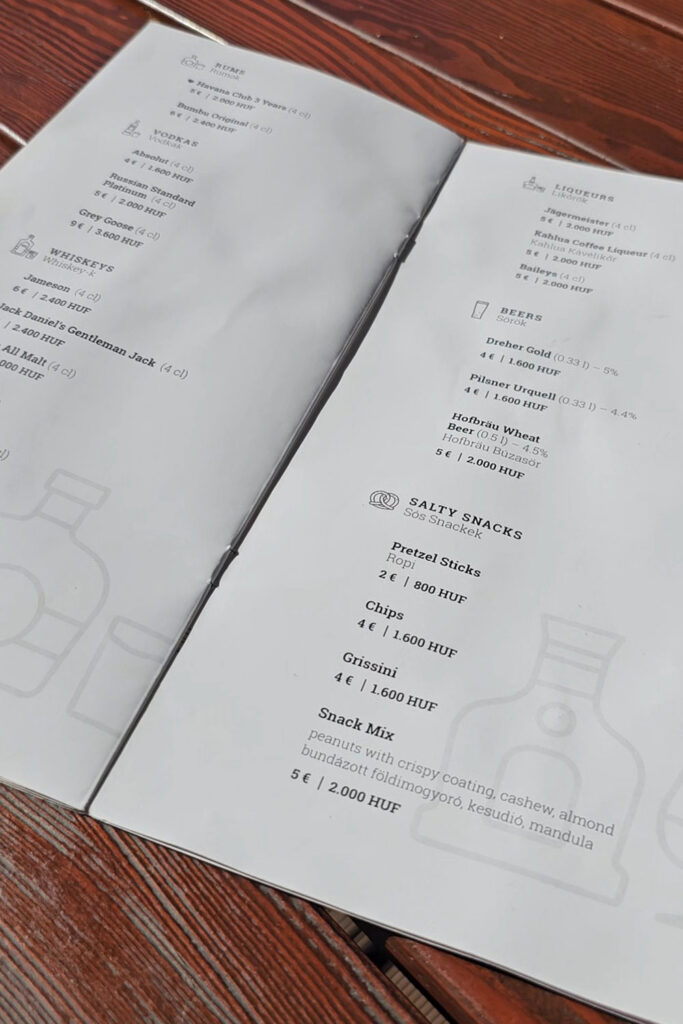
Additional drinks and snacks available for purchase on board and are reasonably priced.
You can book directly at the dock like I did, but since these are small boats, they often sell out. It is better to do it in advance online via the operator website, dunacruises.com, or on GetYourGuide, so you secure your spot.
I noticed that there is an extra online booking fee in case of a direct booking, which doesn’t apply when booked through online platforms such as Viator, so I recommend the latter.
Daytime Vs Evening Cruise – Which One Should You Choose?
While evening cruises (not just this historical tour but Budapest river cruises in general) often get the spotlight for their illuminated views of the city, I was pleasantly surprised by how much I loved the afternoon cruise. The weather was perfect, the Danube sparkled in shades of blue and green, and visibility was excellent for photography.
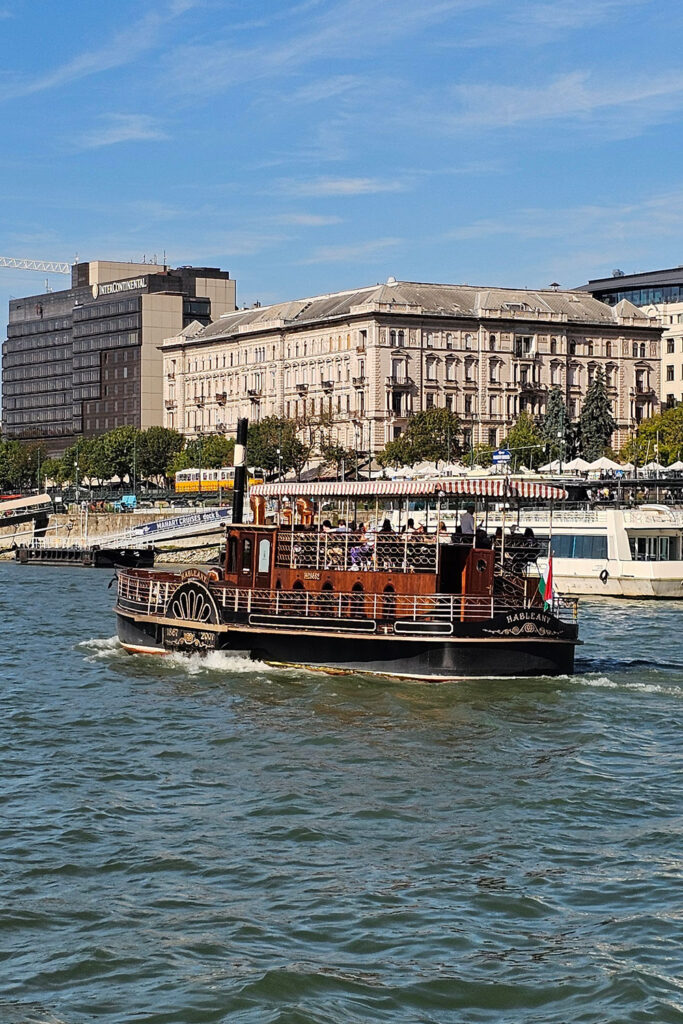
Unlike busy evening departures, the boat wasn’t crowded, so I could move freely between seats and even stand at the bow for unobstructed views. Another advantage: during the day, you can enjoy the full panorama of both Pest and Buda sides, not just the main landmarks that are highlighted at night.
Evening cruises, however, remain incredibly popular for a reason. Seeing Budapest’s iconic attractions lit up along the Danube, especially the Parliament, Chain Bridge, and Buda Castle, is undeniably magical.
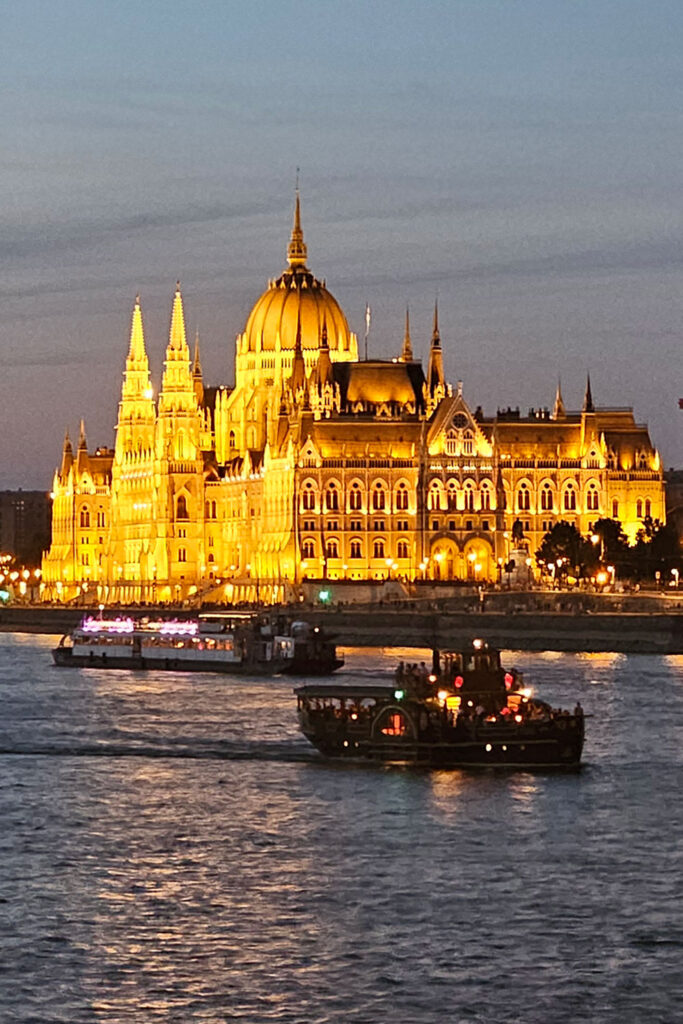
The golden glow of the city reflected on the river, combined with the atmosphere, makes evening departures an unforgettable experience. It is also one of the most romantic things you can do in Budapest, so it’s an absolute must-do if you are visiting with your partner!
Both cruises have their unique charm. Honestly, if you can, try both – each offers a different perspective and the magic of Budapest!
Daytime Cruise Key Features
- Best for: Photography, clear views of all landmarks, observing both Pest & Buda in natural daylight
- Crowd level: Generally less crowded, more freedom to move around
- Atmosphere: Bright, vibrant, relaxed, casual
- Price: Affordable, starting from ~€10–12, making it a good choice even for budget-conscious travelers
- Bonus: Enjoy the colors of the Danube, reflections, and surrounding architecture in natural light
Evening Cruise Key Features
- Best for: Experiencing Budapest’s illuminated skyline, romantic vibe, and city lights
- Crowd level: More popular, often fully booked, especially in peak season.
- Atmosphere: Magical, cozy, and festive, great for couples
- Price: More expensive, typically €28–36
- Bonus: Candlelit tables and sparkling city reflections on the river creating romantic vibes
Wrapping Up The Experience – Pros and Cons
Here’s what I loved about this cruise – from the atmosphere to the details that made it special. And since I honestly can’t mention any major downsides (it was a truly pleasant experience!), I’ve also included a few things you should know in advance that might make it not the perfect choice for everyone.
What I Loved
- The historic atmosphere – the paddle steamer really feels special compared to the usual modern boats
- Excellent value for money, especially for daytime cruises
- Friendly, professional crew and smooth organisation
- Ideal departure point, the dock where the boat departs and arrives is conveniently located near Elisabeth Bridge, at an easily accessible spot along the riverbank
- Comfortable waiting area at the dock with seating and shade
- Spacious decks and freedom to move around for photos
- Good drinks (the Törley Frizzante was a highlight!)
- Parasols, umbrellas, and blankets are thoughtfully provided on board whenever the weather calls for them
Things To Keep in Mind
- Audio guide (available in 30 languages) works via your phone – bring earphones
- No full meals, just snacks and drinks
- Evening cruises on these historic boats are among the more expensive river cruises in Budapest, but they offer an unmatched atmosphere and charm
- Accessibility may be limited for wheelchairs, but staff will assist with boarding and during the cruise, those who need help
- In peak season and popular time slots (sunset/evening), book in advance to secure a spot on this specific historic vessel
Tour Information Summary
- Departure point: Dock 10, Pest side, near Elisabeth Bridge
- Getting there: Walk along Jane Haining rakpart or take Tram 2 to Március 15. Square
- Departure times: Cruises depart year-round, several times a day from early afternoon to late evening with schedules varying by season
- Duration: 60 minutes (arrive ~15-30 minutes early)
- Facilities: Onboard bar, restrooms, covered and open decks
- Best time: Sunny afternoons for photos; evenings for city lights
- What to bring: Earphones, camera, light jacket, and some cash or card for extra drinks/snacks (one welcome drink is included)
- Ticket prices: start from ~€10 for daytime cruises and go up to €32–37 for evening departures. Children under 3 years old can travel for free. Tickets can be purchased on the spot, but booking ahead is recommended, especially during weekends or summer months, to secure your preferred time slot
- You can easily book the tour through online ticket-selling platforms like Viator: Budapest Historic Paddle Steamer Boat Tour
Final Thoughts
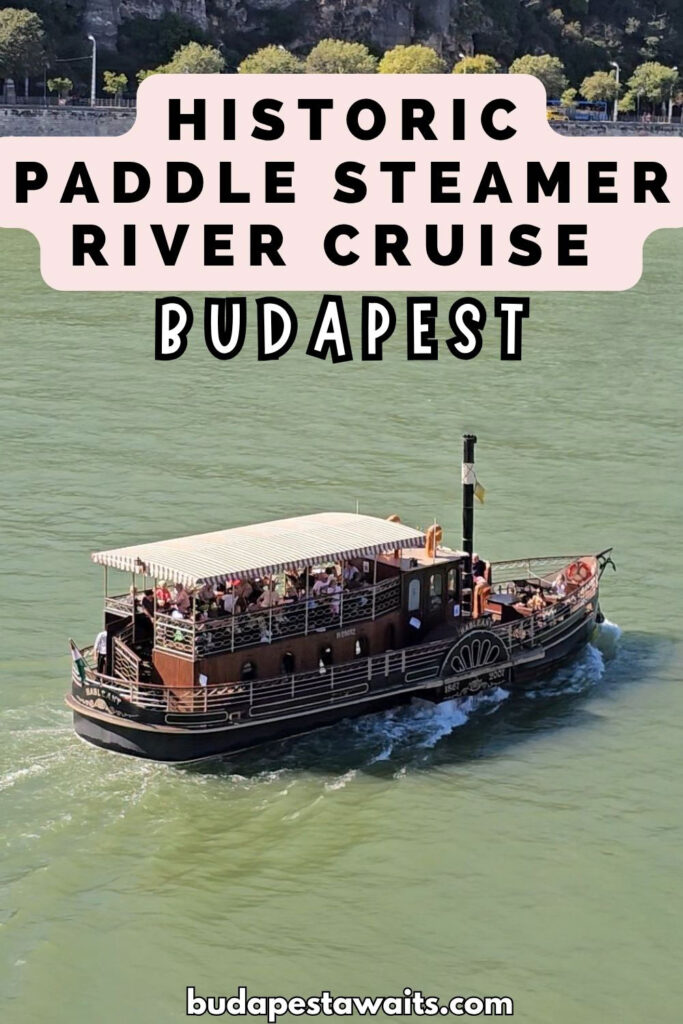
The Budapest Historic Paddle Steamer Cruise is a gem among the city’s many river tours; it is unique, relaxed, and refreshingly local. It’s not just about sightseeing; it’s about stepping into a piece of the city’s maritime past while enjoying one of Europe’s most beautiful cityscapes.
For the price I paid, it was truly a fantastic tour – historic, scenic, yet still affordable. If you secure your spot at the price of just €10 (or lower if you find a deal), I can honestly say this will be the best €10 you’ll spend in Budapest.
If you’re visiting Budapest and want a cruise that combines authentic charm with great value, I highly recommend this one-hour journey on the Danube. Whether you sail by daylight or under the city’s evening glow, the experience will not disappoint!