
Tourist Scams In Budapest: 17 Tricks and Traps To Watch For (and How to Outsmart Them)
Budapest is one of Europe’s most beautiful and safest cities. Most trips go completely trouble-free, but like any capital (and an increasingly popular destination), scams have always existed and are becoming more sophisticated as tourism grows.
I consider myself lucky – nothing serious has ever happened to me, apart from small annoyances like someone trying to sell me fake perfume in an underpass or buying a keychain thinking the money goes to people in need (I tell the story later). But that’s probably because I tend to avoid the classic scam hotspots, or just because I am a local and not a target.
However, over the past few years, travelers have reported various scams, often involving friendly strangers, unauthorized officials, or dishonest businesses. Therefore, to help you enjoy your trip without any unpleasant surprises, I’ve collected the most common tourist scams in Budapest, with tips on how to avoid them. So, let’s see what tricks and traps to watch out for if you don’t want to get scammed in Budapest!
Disclosure: This post may contain affiliate links, which means I may receive a small commission, at no extra cost to you, if you make a purchase through my link.
Restaurant and Bar Tricks
One of the best parts of any trip is trying the local food and drinks – and Budapest is full of great spots for that. But while most places are fantastic, a few sneaky spots still try to take advantage of hungry tourists. So, before you sit down for that goulash or glass of wine, here are the most common tricks you might come across in restaurants and bars.
The Menu Swap
A classic restaurant scam is swapping the menu – and somehow, it’s never going out of style. Even now, when many places have digital menus, a few still try this old-school trick, so it’s definitely worth mentioning.
I haven’t personally been caught by it, but I’ve heard from a few tourists who were. The situation usually goes like this: you sit down, get a normal menu with reasonable prices, order your meal, and everything seems fine. Then the bill arrives – and suddenly your goulash costs twice as much. When you question it, the waiter insists that’s the menu you ordered from and shows you a completely different one with inflated “tourist prices.” The original menu you saw at the start? Magically gone.
It doesn’t happen everywhere, of course, but it still pops up in the most touristy areas, especially around Váci utca or near popular attractions.
How to avoid it:
- Whenever possible, choose places with digital menus (QR code or website) – it’s much harder for anyone to pull off a swap.
- Still, don’t avoid small, family-run restaurants just because they use traditional menus – those are often the best finds. Just keep the menu with you until you’ve paid.
- Before you sit down, check recent reviews online – people usually warn others quickly if a place is pulling tricks like this.
- If something feels off, like no menu displayed outside or prices that change mid-conversation, just move on. Budapest has countless great spots that don’t need to play games to get your business.
Complimentary Items / Hidden Fee
Another classic restaurant scam that still happens from time to time in Budapest is the free item and extra fee trick. You sit down, everything seems normal, and before you know it, there’s bread, a small appetizer, or even a “welcome drink” on your table – none of which you actually ordered. You might think it’s complimentary, but when the bill arrives, those “free” extras suddenly cost a few thousand forints.
Sometimes the problem isn’t the food – it’s the fees. Some restaurants and street food stalls quietly add unexpected charges to the final bill: things like a vague table fee that was never mentioned before. And when you question it, they’ll say it’s standard practice or it is common in Hungary. Spoiler: it’s not – unless it’s clearly stated on the menu, since service fee or szervizdíj is legal in Hungary and therefore regulated.
Restaurants are allowed to add a service fee, but only if it’s clearly stated on the menu and the bill. The legal maximum is 15%, and it’s meant to replace tipping – as How To Hungary reminds. If you see both a service fee and a suggested tip line, that’s your cue to question politely.
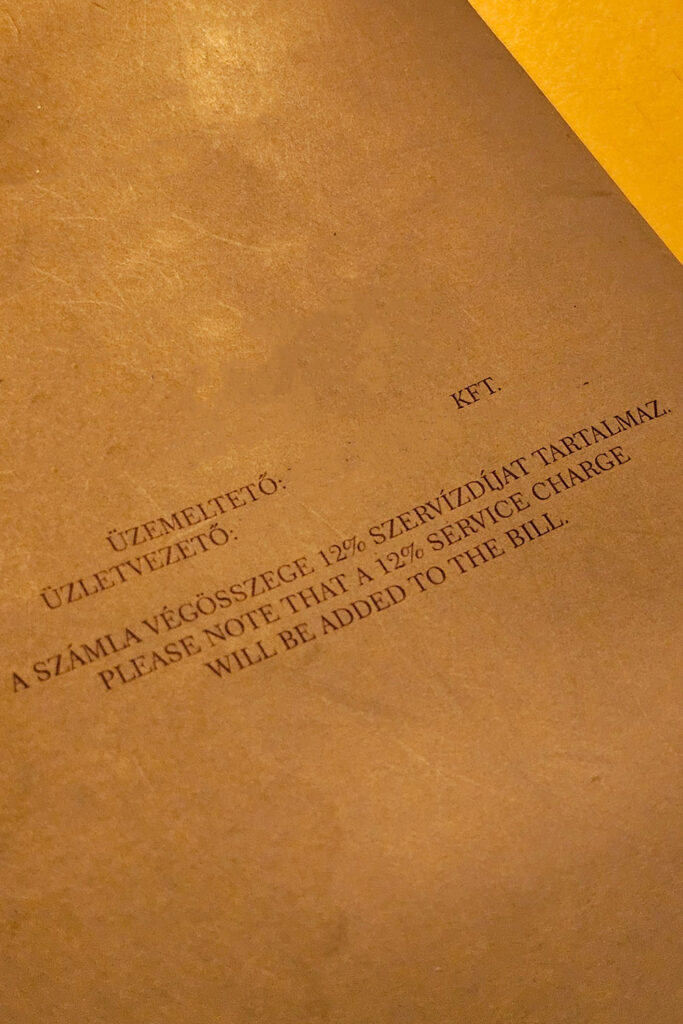
To stay on the safe side: if something is placed on your table unasked confirm whether it’s complimentary before touching it. Always check the menu for any mention of a service charge (szervizdíj). If a charge appears that wasn’t listed, you have every right to ask about it or request to see the menu again. The key rule; if it’s on the bill, it must be on the menu.
The “Pretty-girl” Coffee/Bar Invite
Bar scams in Budapest are still done the old way – they’ve just gone a bit more digital these days: an attractive woman approach you on the street (or lately via dating apps) and invite you to a specific bar.
Then, you end up in a nearly-empty club where they start ordering drinks for you and for themselves. Later, you’re presented with a huge bill or strong-armed into paying. Sometimes the manager shows up to “help” and suddenly things get a little… intimidating.
Best practice: if a stranger invites you out of nowhere, just politely decline. Don’t accept unsolicited drinks or food, and always check the prices before you order – and keep the menu with you from the moment you start ordering until you’re done.
These scams usually happen around Budapest’s nightlife center – especially around Váci utca, Király Street, and Jewish Quarter, where the famous ruin bars are. And that’s the tricky part, because those bars are absolutely worth visiting.
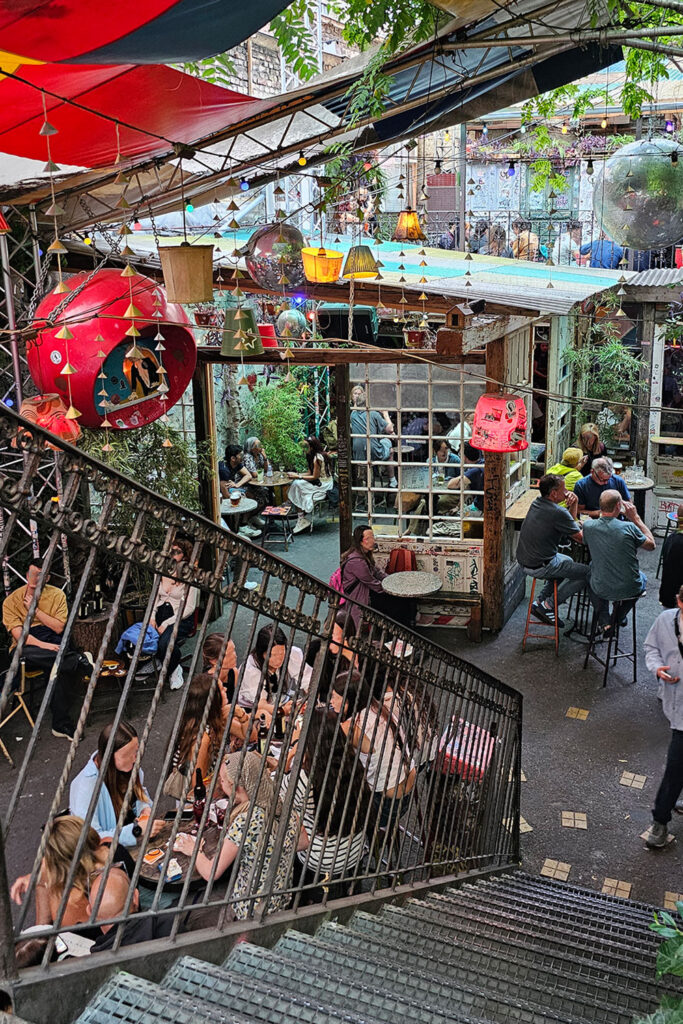
My tip? Go in the late afternoon, just after they open. You’ll still catch the atmosphere without the chaos, enjoy a drink or two, soak in the vibe – and when the crowd (and potential scammers) start showing up, just slip off to a smaller, quieter spot for the rest of your night.
ATM, Card And Payment Scams
When traveling, money matters are often where tourists slip up – not because of carelessness, but because scams around ATMs, cards, and currency exchange can be surprisingly subtle. Budapest is no exception: while it’s a modern city where card payments are widely accepted and digital banking is the norm, there are still a few traps that catch visitors off guard. Now let’s go through the most common money-related tricks – and how you can keep your spending smooth, safe, and scam-free while exploring this beautiful city.
Currency Exchange Rip-offs
Yes, Hungary still uses the Hungarian Forint (HUF), and it’s one of the most common questions visitors ask when planning a trip to Budapest: Do I need to exchange money, and how should I pay?
The short answer: you’ll pay in forints almost everywhere, but the good news is that card payments are now widely accepted. So there’s no need to exchange large amounts of cash. A multi-currency card, such as Revolut (which I’ve personally used for years and highly recommend), works perfectly.
When paying, always choose to pay in forints, and your bank will take care of the conversion automatically, usually at a much better rate than any exchange office would give you.

If you want to have a bit of cash for small shops, markets, or public toilets, just change a small amount (around €30–50) – that should be more than enough. However, avoid roadside money changers, privately operated ATMs and exchange machines, which often use terrible exchange rates or add hidden fees.
Instead, use ATMs from major Hungarian banks, such as K&H Bank; they have one of the largest networks in the country and should not charge any extra fee for withdrawing from foreign cards, but always double-check this when actually pulling out the money. There must be a fee notification before the transaction is completed. Or, go to a reputable exchange office. I’ve personally had good experiences with Correct Change, which offers fair rates and transparent service.
In short: pay by card whenever possible, exchange only a little forints for cash expenses, and you’ll avoid one of the easiest tourist traps in Budapest.
The ATM “Helper”
Since we’re already talking about ATMs, there’s one more scam worth mentioning – it used to be quite common a few years ago, and while it has declined with fewer people withdrawing cash, it still happens occasionally.
The scam has surged recently around the party districts (Districts VI–VII, the Jewish Quarter), especially late at night. It usually starts when a seemingly friendly local approaches you at an ATM, offering help with your withdrawal.
According to Telex, a Hungarian news site, the pattern goes like this: “Offenders approached victims near ATMs, offered to help, or claimed the ATM malfunctioned. While escorting the victim to another ATM, another member of the group took the cash left in the original machine.” In one incident, three tourists lost around 360,000 HUF (~€1,000) in total before realizing what had happened.
So, when pulling out money, just take the same precautions you normally would anywhere else:
- Never accept help from strangers at an ATM – no matter how friendly or well-intentioned they seem.
- Shield the keypad while entering your PIN.
- Wait until your transaction is fully complete, and make sure you have both your card and your cash in hand before walking away.
- If anyone claims the ATM is malfunctioning or offers to “show you a better one,” just walk away – and if you feel unsafe, cancel your card or call the police.
Card Skimming
With the increase of card payments, skimming is something you need to stay alert for. While cases are relatively rare, scammers can attach hidden skimmer devices to ATMs or even to payment terminals in shops, taxis etc….
To stay safe, use ATMs located inside actual bank branches (often behind glass doors), and avoid private machines you’ll see around tourist areas. When paying by card, never let your card out of sight. Watch every transaction, make sure the card reader looks legitimate, and if anyone tries to take the terminal out of view, even for just a second, cancel the payment immediately.
Unfortunately, even official ATMs or reputable shops can fall victim to skimming devices. It happened to me once (not in Budapest, but while traveling), and it taught me how important it is to act fast.
Luckily, my card was used for a small transaction (probably a card check), and I could block it right through my mobile app. So, make sure you have your bank’s mobile app installed and know how to block your card instantly if anything suspicious happens. If your bank doesn’t offer this feature, save their hotline number so you can call and freeze your card immediately.
The Extra-Zero Trick
In Hungarian Forint (HUF), the numbers can look a bit intimidating at first. With the current exchange rates hovering around ~330-340 HUF for $1 and ~390–400 HUF for €1, prices can easily seem sky-high even when they’re not. For example, a €20 taxi ride will cost around 8,000 HUF, and a €80 restaurant bill will cost roughly 30,000 HUF.
And that’s exactly what some unethical businesses (usually taxi drivers, restaurants, bars, but even simple souvenir shops) take advantage of. They know visitors can get confused by all those zeros – so they sneak in an extra digit when entering the amount on the payment terminal. That small “typo” suddenly turns 8,000 HUF into 80,000 HUF, and before you realize it, you’ve just paid ten times the real price.
You can pay by card almost everywhere in Budapest these days, so this scam has become even easier to pull off – no more handing over cash and noticing the difference. You tap, the machine beeps, and you’re on your way… only to notice the mistake later in your banking app.
So, be present and alert when finalizing a payment: always double-check the amount on the terminal before tapping or inserting your card. Take your time, even if the waiter or driver seems in a hurry. Keep your contactless limit low, so higher transactions require a PIN (good practice not just in Budapest, but anywhere).
And if something looks off – like too many zeros – cancel the transaction immediately and ask to see the printed bill again.
Taxi & Transport Scams
Getting around Budapest is pretty straightforward – the city’s taxis, trams, and metro system cover almost every corner, and most rides go off without a hitch. But like in many major tourist destinations, a few bad apples still try to take advantage of visitors who aren’t familiar with local prices or rules. Let’s take a look at what to watch out for when it comes to transportation – and how to get around Budapest safely, without overpaying or risking fines.
Unofficial Taxis – the “Hyenas”
Ah, the infamous Budapest taxi “hyenas” – yes, they still exist. While the taxi situation in Hungary has improved a lot over the past years, a few of these unofficial drivers are still lurking around, especially near major tourist spots, train stations, and the airport.
Their trick is simple: they approach you directly, offering a “good deal”. Some will even stand right next to real taxi ranks, pretending to be part of the queue. Once you get in, they might:
- Refuse to turn on the meter
- Quote a flat rate “special price” (which turns out to be triple the normal fare)
- Or take a much longer route to bump up the total
These hyenas are usually not registered drivers, so if something goes wrong, you have no protection or recourse.
Never accept taxi offers from people who approach you at stations or the airport. Just walk to the official taxi stand or use your app. It might take an extra minute, but it can save you from paying triple the price (or worse).
Always use official taxis only – they’re easy to recognize:
- They’re bright yellow
- Have the company logo and license number clearly printed on the side (don’t use any car with ‘Freelancer; sign, even if it is the same yellow color as those are unofficial too)
- They always use the meter
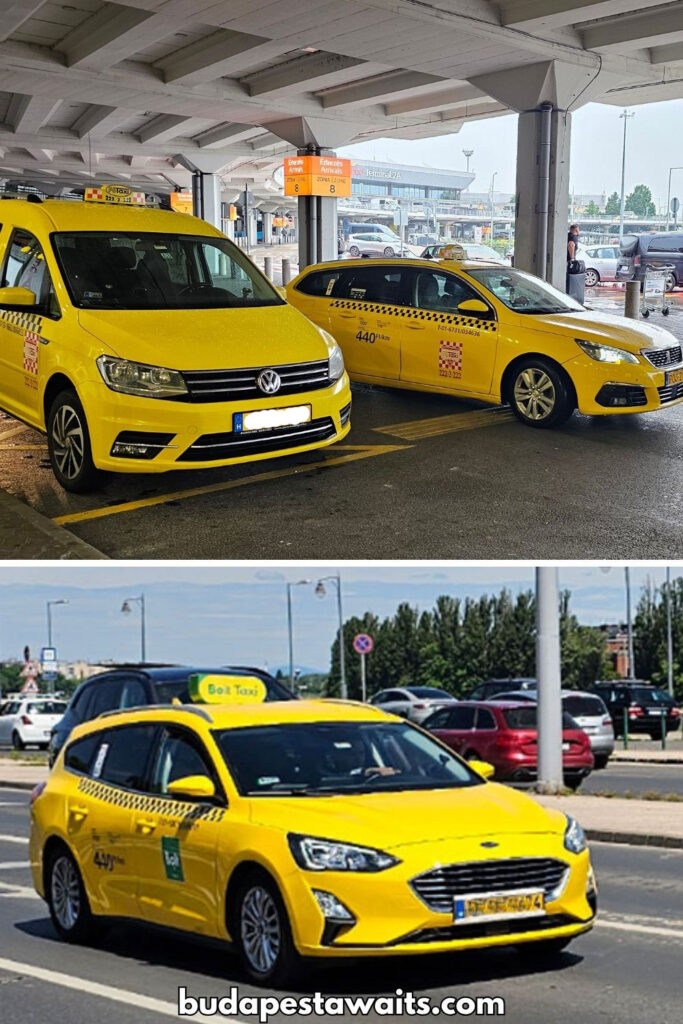
The two biggest and most reliable companies are Főtaxi and City Taxi. You can call them directly, book through their apps. Or, use the usual ride-hailing services like Bolt or Uber: both are available in Budapest and operate in partnership with local, licensed taxi companies.
Fake Ticket Inspector
Budapest’s public transport system is really good – affordable, reliable, and easy to use, so even tourists often choose it over taxis or private transfers. It’s no surprise, then, that some scammers hang around too, pretending to be ticket inspectors to find targets.
They might stop you on a tram, bus, or even just outside a metro station, and claim you didn’t validate your ticket correctly, using a discount without entitlement, etc… They’ll often act serious, flash something that looks like an ID, and demand an on-the-spot fine, usually around 12,000 HUF (~€30), which happens to be the same amount as the official penalty when paid on the spot.. In some cases, they’ll show fake paperwork or pressure you to pay in cash right away.
Luckily, this trap is easy to avoid if you bought the correct ticket/pass and validated it correctly. Remember that a single-use ticket must be validated: on the metro before starting the journey, at the gate, or right after boarding on trams and buses.
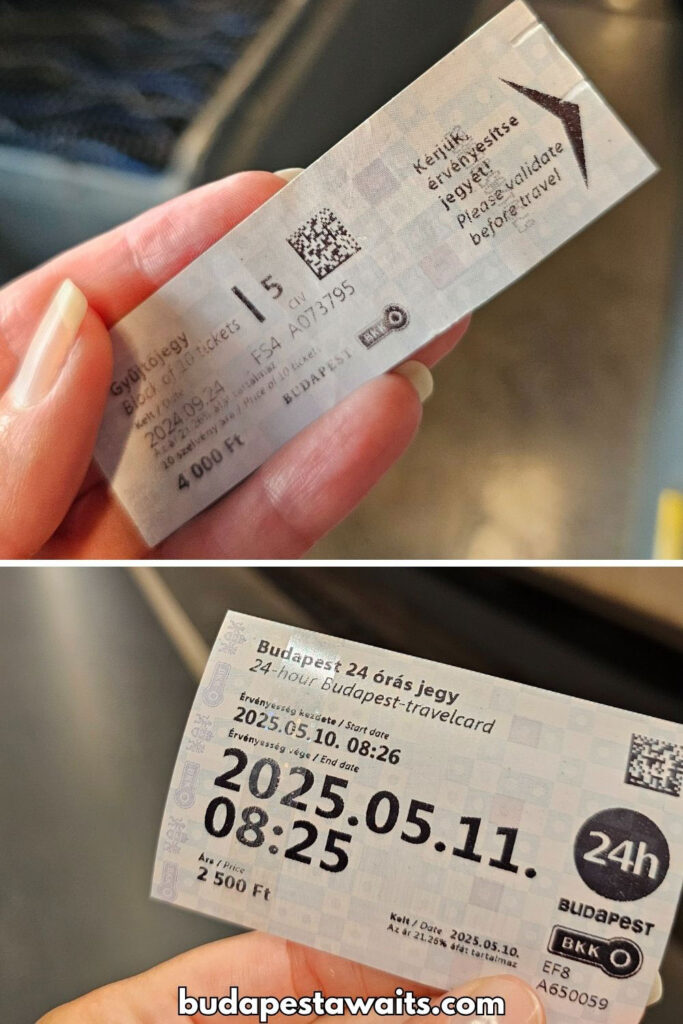
An easier option is to buy a 24-hour or 72-hour pass, which doesn’t need validating each time you ride. You can also use the BudapestGO app to buy and validate digital tickets – that way, everything stays on your phone and can’t get “lost in translation.”
Real ticket inspectors are actually easy to recognize – they wear uniforms, carry official BKK IDs, and these days usually have electronic ticket-checking machines with them. They’re never aggressive or pushy. You’ll usually spot them in small groups at metro entrances or exits, and only occasionally on buses or trams. When they check your ticket or pass, they just scan it quickly, maybe nod, and often simply say “good day” before moving on.
If you’re caught without a valid ticket, the official penalty is 25,000 HUF (~€65), but it’s reduced to 12,000 HUF (~€30), if you pay it on the spot – payment can be made by cash or card.
If something feels off or the person seems suspicious, ask politely to see their official BKK ID – real inspectors won’t mind at all. And if you’re still unsure, you can always call 112 (the police) to verify.
When in doubt, check the official BKK penalty policy page – it lists all legitimate fine amounts and procedures.
Discount Ticket Phishing
Here’s a newer type of scam that popped up in late 2024 – and it’s surprisingly sneaky. Fake Facebook pages pretending to be BKK (Budapesti Közlekedési Központ), the official Budapest public transport company, started advertising “limited-edition travel passes” for ridiculously cheap prices, like “500 special passes for just 800 HUF.”
Sounds tempting, right? Except when you click the link, it takes you to a phishing website that looks almost identical to the real BKK page – asking for your personal information and bank details.
This one’s actually very easy to avoid. BKK never sells discounted passes through social media, only through official channels, meaning:
- BKK ticket vending machines (you’ll find them at metro stations and major stops)
- BKK customer service points or kiosks
- The BudapestGO app, which is the official public transport app for Budapest, which allows you not only to buy and store digital tickets and passes, but it also helps you plan your routes and check real-time service updates.
So, rule of thumb: if a deal looks too good to be true (especially on social media), it almost always is.
Digital & Tech Scams
In a world that’s becoming increasingly digital by the day, it’s easy to forget that some scams don’t happen face to face but through your phone or laptop. Budapest is a modern, connected city, but that also means scammers are getting creative online, not just on the streets. Here are the most common tech-based tricks you’ll want to watch for.
Unsafe Wi-Fi Networks
Free Wi-Fi sounds like a dream when you’re travelling – but it can be the exact opposite. In heavy tourist zones (busy cafés, train stations, airports), cybercriminals often set up “evil twin” Wi-Fi networks: they create a hotspot with almost the same name as the real one. Once you connect, they can intercept your data, including passwords or card info.
To stay safe:
- Never connect to suspicious or generic networks (like “Free_WiFi” or “CafeGuest123”).
- Ask the staff for the correct network name and password before connecting.
- Use a VPN (Virtual Private Network) which encrypts your connection and hides your data from snoopers. Many apps make it as simple as pressing one button.
- Or better yet, just use your mobile data. It’s no longer as expensive as it once was – most carriers now offer reasonable roaming plans or even worldwide data options. Alternatively, you can buy a local eSIM, which is affordable, easy to set up online, and perfect for travelers since it activates instantly without the need for a physical SIM card.
Fake QR Codes
QR codes are everywhere now – restaurant menus, parking meters, tourist info boards – and scammers have started to take advantage of that. By placing a fake QR sticker over a legitimate one, they can redirect you to a malicious website, ask for payment or even install malware on your device. This trick has become so common it even has a nickname: “quishing.”
To protect yourself, avoid scanning codes that look tampered with or printed on a sticker. Double-check the URL before clicking any links or entering details; make sure it’s secure (HTTPS) and matches the official site. Use official apps for things like parking or ticket payments instead of scanning random codes. And if a QR code unexpectedly asks for payment or personal information, stop immediately. A good rule of thumb: treat your phone like your wallet. Don’t hand it (or its data) over to anyone you wouldn’t trust in real life.
Other Common Tourist Traps
Some scams are so casual and friendly that you won’t even realize what’s happening until it’s too late – a chatty stranger, a friendly “charity” collector, or a vendor with deals that are just too good to be true. Let’s take a look at some of these everyday traps, so the only thing you’ll lose in Budapest is your heart, not your wallet.
Charity Rip-Off
This one’s an old classic – and I’ll admit, even I once fell for it. That’s how I ended up with a smiley keychain (which, to be fair, I still have). To make myself feel a bit better, I was quite young at the time and had no idea it was a scam.
I was sitting in a park when an elderly woman approached me, handed me the keychain, and told me the money was going to sick children. She only asked for a few hundred forint (~1.5-2€), so I believed her and paid.
Lesson learned: not everyone holding a kind smile and a “charity” sign is actually helping others – sometimes they’re just helping themselves, or even worse, helping someone making a living out of such lies.
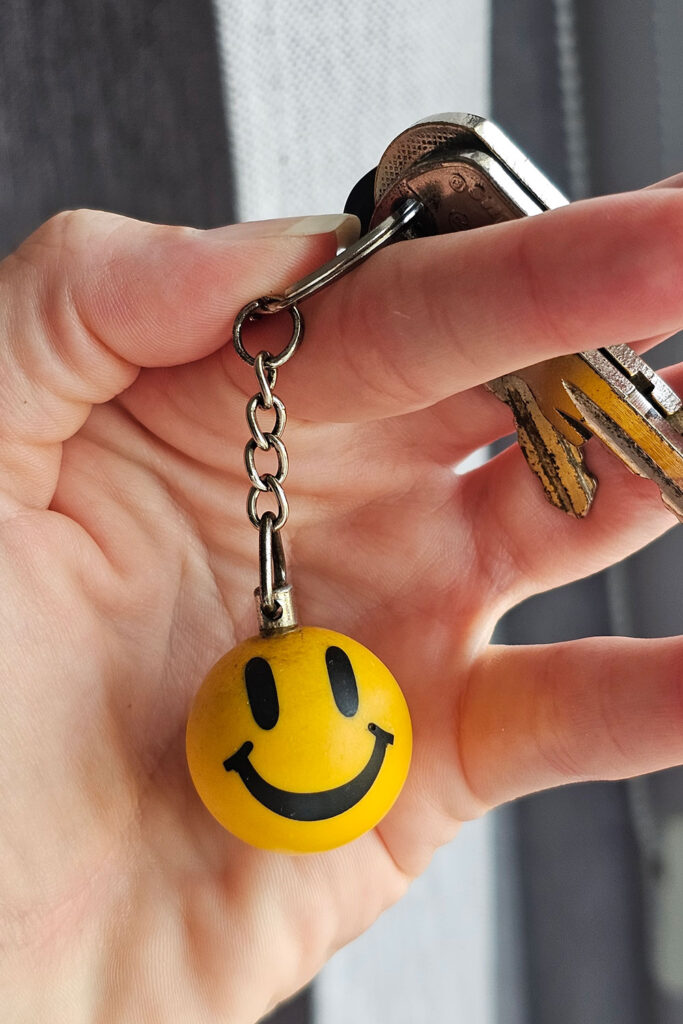
These “charity collectors” are still around today. You might spot them outside train stations, on busy shopping streets, or even inside fast food restaurants. They usually approach quietly, handing you a small trinket – a toy, bracelet, or keychain – along with a note claiming it’s for orphans, disabled kids, or another heartfelt cause. The trick is that once you accept the item, they’ll start insisting on a “donation” – often asking for €10, €20, or even €50.
To avoid such situations, if someone hands you something unexpectedly and asks for money, just give it back and walk away. Don’t feel bad – real charities don’t operate like this. Legitimate organizations in Budapest will always have official documentation, branded materials, and donation boxes, not random individuals approaching people in public spaces.
Fake Police or Authority Check
This one has been around for years – and while it’s getting less common these days (since most people use cards instead of carrying cash), it’s still worth mentioning.
The scam usually goes like this: someone approaches you near a tourist spot, train station, or on public transport, pretending to be a police officer or ticket inspector. They might flash a fake badge and claim they’re checking for counterfeit money or doing a random checks. Then, they’ll ask to “inspect” your banknotes and/or see your passport/ID.
If this ever happens, never hand over your money or documents to anyone on the street. Real Hungarian police officers don’t do random inspections without reason. Their badges have serial numbers, while scammers just have a “POLICE” label printed on their jackets.
If you’re unsure, ask to be taken to the nearest police station or simply call 112 (the EU emergency number) to verify. They will back off the moment they realize you’re not an easy target.
Random Street Vendors
Like in many big cities, this old trick still pops up in Budapest too. You might run into street sellers – often scruffy-looking and hanging around underpasses, near train stations, or bus terminals – trying to sell you perfumes, cosmetics, handbags, or even bits of clothing.
Their approach usually starts off friendly: they’ll tell you a story about needing money for food or for a sick family member, and they might even show you “branded” products that look convincing from a distance. But once you say no, their tone can change fast – sometimes becoming pushy or even aggressive.
The truth is, these items are almost never genuine – at best, they’re cheap counterfeits, and at worst, they might even be stolen goods.
If someone like this approaches you, don’t stop or engage in conversation. Just say “no” clearly and keep walking. Most of them will give up quickly once they see you’re not interested. If anyone follows you or becomes aggressive, call the police (112) right away.
Distraction Pickpockets
Pickpocketing in Budapest isn’t about snatching bags and running – it’s all about distraction. Thieves usually work in teams and rely on that one second when your attention slips. One person chats you up, bumps into you, or “helps” you, while their partner does the actual stealing.
Common tricks include:
- Asking for directions or small talk: Someone friendly starts a conversation about Budapest or asks where you’re from, while their accomplice quietly reaches for your pocket or bag.
- The “lost friend” phone trick: A stranger asks to borrow your phone to call their friend because their battery died – and either runs off with it or uses the moment to distract you.
- Offering to take your photo: Sounds kind, right? But they might simply walk away with your phone or camera.
- The commotion method: A child bumps into you, or someone drops something to make you look down – classic teamwork distraction.
These things usually happen in crowded areas like metro stations, tram stops, markets, or busy squares – in places and situations where your attention is divided.
How to protect yourself:
- Don’t hand your phone or valuables to strangers, ever.
- Keep valuables out of easy reach, for example, in a crossbody bag zipped and in front of you, not hanging off your back.
- Never hand your phone to a stranger to make a call or take a photo
- Use anti-theft features. Bags with lockable zips, slash-proof straps, and RFID protection help. Split cash and cards so you always have backups.
- Be especially cautious when boarding trams or using ticket machines; these are common distraction spots.
To sum it up, if someone’s being overly friendly or persistent, there’s probably a reason – and it’s not because they genuinely want to help you find your way or buy a ticket.
Of course, it’s not always easy to tell; there are still plenty of kind, honest locals who really do offer help when they see someone struggling, especially tourists trying to figure something out. That’s why I recommend following one simple rule: in Budapest, like anywhere else, trust your instincts.
Overpricing
This one isn’t exactly a scam, more like a universal tourist trap that exists anywhere visitors flock. In Budapest, it usually shows up in the form of inflated prices at souvenir shops, especially along Váci Street or near Buda Castle. Some places mark up their items heavily, while others simply don’t display prices at all and only quote (or invent) a number when you ask, or worse, at the moment you’re about to pay.
Don’t worry though, these situations are easy to avoid. Only buy where prices are clearly shown: quickly convert the listed price to your own currency to see if it makes sense. If the price feels off, it probably is. The good news is that just walking one or two streets away from the main tourist areas can make a huge difference in price.
For example, I’d never buy a chimney cake from the most touristy stalls that ask €8–10 per piece; you can find the same (and often tastier) ones from smaller kiosks or underpass stalls for around 1,000 HUF (about €2.5). And if you want some snacks like Hungarian chocolates or traditional foods to take home, just pop into a local supermarket.
Budapest can still be done budget-friendly without being overcharged – you just need to pay a little attention.
Quick Overview: Common Tourist Scams & Tricks in Budapest
Scam / Trick | Where It Happens | How It Works | Risk | How to Avoid It |
Menu Swap | Touristy restaurants (Váci utca, near attractions) | You get charged from a pricier “tourist” menu. | Medium | Keep the menu until you pay; check reviews first. |
Complimentary Items / Hidden Fee | Restaurants, cafés | “Free” bread or drinks appear on your bill; hidden fees added. | Medium | Ask if it’s free; check menu for “szervizdíj.” |
Pretty-Girl Bar Invite | Streets, bars, dating apps | Friendly woman lures you to a bar, then you’re hit with a huge bill. | High | Don’t follow strangers; choose bars yourself. |
Currency Exchange Rip-Off | Exchange offices, private ATMs | Poor rates or extra commissions disguised as “service fees.” | Medium | Use ATMs inside banks; or correct exchanges |
ATM “Helper” Scam | ATMs near nightlife areas | A stranger “helps” while an accomplice steals your cash. | High | Never accept help from strangers; finish the transaction fully. |
Card Skimming | ATMs, taxis, shops | Hidden skimmers copy your card data. | Medium | Use bank ATMs; never let your card out of sight. |
Extra-Zero Trick | Taxis, shops, restaurants | A “typo” adds an extra zero to the total. | High | Always check the amount before tapping your card. |
Unofficial Taxis (“Hyenas”) | Airport, train stations, tourist zones | Fake taxis overcharge or take long routes. | High | Use official yellow taxis or apps (Főtaxi, Bolt, Uber). |
Fake Ticket Inspector | Public transport | Scammers posing as BKK inspectors demand on-the-spot fines. | High | Ask for a BKK ID; real inspectors have badges & devices. |
Discount Ticket Phishing | Social media ads | Fake BKK pages “sell” passes and steal your card info. | Medium | Buy tickets only via BKK machines, kiosks, or BudapestGO app. |
Unsafe Wi-Fi Networks | Cafés, airports, hotels | Fake “free Wi-Fi” captures your data. | Medium | Ask staff for the real network; use VPN or mobile data/eSIM. |
Fake QR Codes (“Quishing”) | Menus, parking meters, tourist boards | Fake QR stickers redirect you to scam sites. | Medium | Check if code looks tampered; verify the URL before paying. |
Charity Rip-Off | Streets, parks, restaurants | “Charity” sellers hand you trinkets, then demand donations. | Low | Don’t accept items; legit charities have IDs and receipts. |
Fake Police / Authority Check | Stations, busy areas | Scammers pretend to be police and ask to “inspect” your cash. | High | Never hand over money; ask for identification or call police to verify. |
Random Street Vendors | Underpasses, stations | Selling fake goods or “urgent deals” at inflated prices. | Medium | Say no and keep walking; don’t engage or buy. |
Distraction Pickpockets | Crowded metros, trams, markets | One distracts you while another steals valuables. | High | Keep bags zipped & in front; don’t hand your phone to anyone. |
Overpricing | Souvenir shops, tourist streets | Inflated prices or no price tags shown. | Low | Compare prices; shop a few streets away from major sights. |
What To Do If You Got Scammed in Budapest?
Even if you’re careful, scams can still happen – it doesn’t mean you were careless or naïve. So, if you realize you’ve been tricked or overcharged, here’s what to do (and who to contact) to fix things as smoothly as possible.
Stay Calm and Write Down the Details
Take a deep breath. Then, note everything you remember – time, place, names, descriptions, receipts, and any license plate or ATM details. Even small things (like what the person looked like or what street it happened on) can help authorities later.
Act As Soon As You Can
The most important rule if something goes wrong? Do the necessary things immediately. The faster you act, the higher the chance of stopping further loss or even recovering what’s been taken.
Depending on the situation, this can mean freezing your bank card instantly or locking your phone/erasing sensitive data remotely if such functions are enabled. The sooner you act, the better the chance of preventing misuse of your cards, accounts or data.
Report It to the Police
You can file a report with the Hungarian police. It’s worth doing, even if you think it’s minor – not just for potential compensation, but because it helps them track tourist scams.
You can call 112, the EU-wide emergency number, which connects you to the police and has English-speaking operators.
You can also visit a police station – the main one, Budapest Police Headquarters (BRFK) is centrally located at 13th District, Teve utca 4–6. They’re used to assisting tourists and will usually have someone who speaks English.
Call For Tourist Assistance
Budapest also has a special Tourist Police Service, with officers who speak English, German, and other languages. They can help if you’ve been scammed, lost something, or feel unsafe.
Tourist Police (Budapest): +36 1 438 8080
File a Complaint if It Happened in a Business
If you were scammed or overcharged in a restaurant, bar, shop, or taxi, you can make an official complaint.
For transportation services, contact the Budapest Transport Authority (BKK) if it was public transport-related or the relevant taxi company’s office. For shops or restaurants: contact the Consumer Protection Office (Fogyasztóvédelem).
Keep your receipt and any screenshots as proof. Even if you don’t expect your money back, reporting bad businesses helps protect future travelers (and sometimes you do get refunded!).
Contact The Embassy (In Certain Cases)
If your passport or ID was stolen, report it immediately to both the police and your embassy. Most embassies in Budapest can issue an emergency travel document within a day or two.
Final Thought: Explore Budapest Smart, Savor Every Moment
If you’ve made it to this section, congratulations – honestly, I never expected this article to get so long! Writing it, I learned a lot myself and feel much more prepared to wander the city safely, and I hope you’ll feel the same after reading about these scams and tricks.
Budapest is a city full of charm, history, and unforgettable experiences. Sure, scams exist, but they’re just a tiny part of the bigger picture. The city is still considered one of the safest capitals in Europe, which is often one of the main reasons people choose to visit. Being a smart traveler matters, but don’t let caution overshadow curiosity. Most locals are genuinely friendly and helpful, and the city’s rhythm rewards those who take the time to wander and discover. Stay aware, embrace the adventure, and let Budapest leave its mark – with memories, not regrets.